

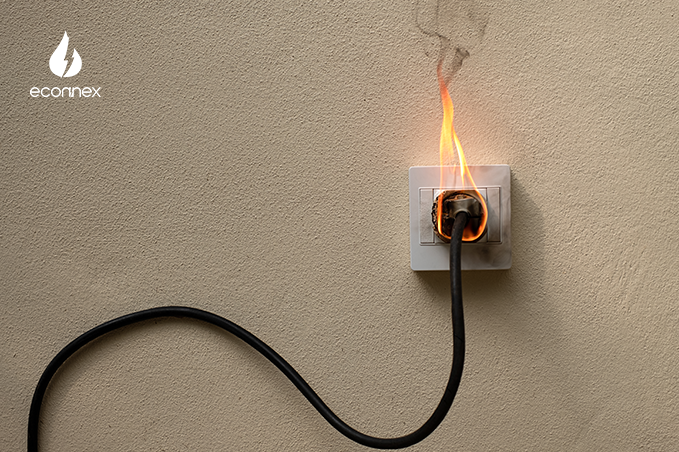
Electrical Outlet Sparking When Plugging In? Here’s Why and What to Do
When you plug something into an outlet and see a spark, it might make you pause. In some situations, a brief flash is harmless. Yet, in other cases, it can be an early warning sign of a problem in the outlet or the wiring in your wall.
So, learning why does an electric outlet spark when plugging in an appliance, and distinguishing between normal sparks and dangerous ones is critical. We’ll explain why do plugs spark, what steps you can take to reduce your risk, and when you need to call an electrician for help.
Why Do Plugs Spark?
When you insert metal prongs into the plug, there’s a brief moment where the electricity can jump across a tiny gap before full contact is made. This electrical arc appears as a spark. It’s bridging the connection even before it’s all the way plugged in.
You’re more likely to notice these sparks when you plug in something that draws a large amount of current, such as power tools, appliances with motors, or even a vacuum cleaner. A brief spark is not generally an issue. The concern is whether the spark stops immediately or continues.
Normal vs. Dangerous Outlet Sparking
If you’re searching online for why does an electric outlet spark when plugging in, you’re likely looking to find out whether it’s something normal or whether it may be a more serious problem. In general, here’s a quick way to tell the difference.
| NORMAL SPARKING | POTENTIAL DANGEROUS SPARKING |
| One-time, brief spark during plug-in | Large, bright, or repeated sparks |
| No sound or a very faint snap | Crackling, buzzing, or popping sounds |
| Outlet remains cool | Outlet feels warm or hot |
| No discoloration or odor | Burn marks, discoloration, or burning smell |
| Stops once the plug is fully inserted | Continues after the plug is in place |
If the spark behavior falls into the dangerous category, stop using the outlet until you get it checked out by a highly skilled electrician.
Some Sparking May Be Normal
A small, quick spark that occurs once during plug-in is usually not a big problem. Internal switches or capacitors inside devices draw current immediately when connected. Until the outlet contacts are seated firmly, sparks can pop out for a brief second.
Warning Signs That Sparking Is a Safety Issue
Sparking is more of a concern when it happens frequently or it’s intense. If you see a bright flash or the sparks happen repeatedly, especially if you hear a snapping or popping noise, electricity may not be flowing cleanly through the outlet.
If the outlet feels warm to the touch, shows discoloration or charring around the slots, or you smell a slight burning odor, there’s likely electrical resistance, loose connections, or internal damage.
Common Causes of Dangerous Outlet Sparking
Several issues can cause outlet sparking to escalate beyond normal behavior.
Loose or Worn Outlet Contacts
Over time, outlets can get loose, losing their ability to grip metal prongs tightly. A loose contact may allow the electricity to jump rather than flow smoothly. This increased arcing and can produce heat as well.
Damaged Plugs or Power Cords
Bent prongs, cracked insulation, or exposed wiring on a plug can create unstable contact points. This can increase risks, including electric shocks.
Moisture Inside an Outlet
Moisture inside an outlet dramatically increases the chance of arcing. Outlets outdoors, in garages, laundry areas, and bathrooms are especially vulnerable. You might see this more commonly in Phoenix, especially after storms or if your irrigation system sprays your exterior outlets.
Aging or Improper Wiring Connections
Loose terminal screws can create resistance. As the metal expands and contracts over time, these connections degrade and spark under load.
In many older homes, backstabbed wiring connections were a popular method for connecting outlets. Instead of anchoring wires to terminal screws, they were pushed into the small holes in the back of outlets. Over time, these wires come loose and can cause overheating, loose connections, and fire hazards.
What You Should Do If an Outlet Sparks
If sparking appears severe or repeats, stop using the outlet immediately. Unplug devices carefully and avoid testing the outlet repeatedly to see if it happens again. Don’t attempt to open the outlet or tighten wiring. Even with the breaker off, there’s a risk of electrical shock. The safest strategy is to get an inspection from a professional electrician.
Outlet sparking may be an early warning sign, which should be taken seriously. Schedule an inspection or repair from the experts at George Brazil Plumbing & Electrical today and stay safe.