

Industrial heating, ventilation, and air conditioning (HVAC) systems are the backbone of large-scale operations. They regulate temperature, control humidity, maintain air quality, and keep production environments within tight tolerances. When these systems run reliably, most people never think about them. When they fail, the consequences ripple across the entire facility, shutting down production lines, sending workers home, and generating emergency repair bills that dwarf the cost of routine care.
This guide explains what industrial HVAC servicing involves, why preventive maintenance is essential, and how a structured maintenance program protects your equipment, your budget, and your people.
What Is Industrial HVAC Servicing and Maintenance?
Industrial HVAC servicing is the systematic inspection, cleaning, testing, and repair of large-scale climate-control equipment. Unlike residential systems, industrial HVAC involves heavy-duty components such as chillers, boilers, cooling towers, air handling units, compressors, and refrigeration systems that run hard and run often.
Maintenance generally falls into three categories:
- Preventive maintenance — scheduled, proactive servicing designed to catch small issues before they escalate. This includes cleaning coils, changing filters, checking refrigerant charges, inspecting electrical connections, and lubricating moving parts.
- Predictive (condition-based) maintenance — using sensors and performance data to service equipment based on its actual condition rather than a fixed calendar.
- Corrective maintenance — repairs made after a component has already failed or begun to underperform.
A well-run facility leans heavily on the first two, because reactive repairs are consistently the most expensive path.
Why Industrial HVAC Maintenance Is So Important
1. It prevents costly downtime
Unplanned HVAC failures are expensive, and often avoidable. Industry analyses estimate that
- Unplanned HVAC downtime costs U.S. businesses roughly $50 billion each year, and that around 95% of these failures are preventable through systematic maintenance programs
- For an industrial facility, a single breakdown can halt production, spoil temperature-sensitive inventory, and trigger rush-service fees plus thousands in lost productivity.
- Preventive maintenance programs have been shown to reduce HVAC service requests by 31 to 50%, while condition-based approaches increase the mean time between failures and shorten breakdown duration
2. It lowers energy costs
HVAC is one of the largest energy consumers in any industrial building. When coils are dirty, filters are clogged, or refrigerant is low, the system works harder to hit the same targets burning more energy in the process. “The U.S. Department of Energy estimates that organizations achieve 5 to 20% annual energy savings through proper HVAC operations and maintenance.” The impact of simple upkeep can be striking: keeping condenser coils clean in a building with 60 tons of cooling can save more than 35,000 kWh over just three months of cooling.
3. It extends equipment lifespan
Industrial HVAC systems are major capital investments.
- Commercial and industrial HVAC systems typically last anywhere from 10 to 25 years, depending heavily on the quality of maintenance they receive.
- Without systematic care, dirt accumulates and forces systems to work harder, refrigerant leaks go undetected, electrical connections loosen, and minor component wear accelerates into major failures.
- Regular servicing protects critical components and delays the significant expense of full system replacement.
4. It protects air quality and worker health
Cleaning filters, coils, and ductwork does more than improve efficiency, it directly affects the air your workforce breathes. When HVAC systems struggle to maintain consistent temperatures and air quality, employee focus and output can suffer. Consistent maintenance keeps indoor air clean and working conditions comfortable, which supports both health and productivity.
5. It preserves warranties and predictability
Many manufacturers require documented annual maintenance to keep equipment warranties valid. Beyond compliance, a maintenance program turns an unpredictable system into a manageable asset, shifting your strategy from reacting to emergencies toward controlling costs and planning budgets with confidence.
What a Preventive Maintenance Visit Typically Includes
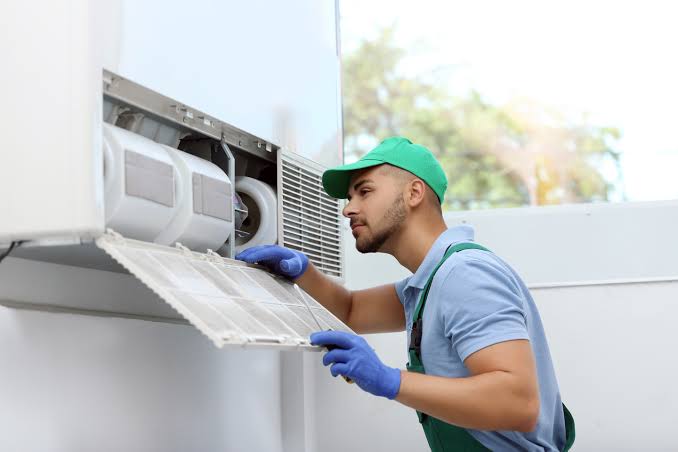
A qualified technician servicing an industrial system will usually work through a checklist covering:
- Inspecting and cleaning condenser and evaporator coils
- Replacing or cleaning air filters
- Checking refrigerant levels and testing for leaks
- Tightening and inspecting electrical connections
- Lubricating motors, bearings, and moving parts
- Clearing condensate drain lines to prevent blockages
- Testing thermostats, controls, and safety systems
- Inspecting belts, fans, compressors, and heat exchangers
- Reviewing system performance data against expected benchmarks
Many of these tasks address the small, quiet problems, a clogged drain line, a loose connection, that compound into major failures when left unchecked.
Building an Effective Industrial HVAC Maintenance Program
To get the most value from servicing, facilities should:
- Schedule maintenance seasonally. Service cooling systems before peak summer demand and heating systems before winter, so equipment is ready when it’s needed most.
- Keep detailed records. Documenting every inspection, repair, and part replacement helps identify recurring issues, supports warranty claims, and informs replacement planning.
- Work with specialists. Industrial and commercial equipment – chillers, boilers, cooling towers, and refrigeration systems, demands technicians with the right training and certifications, not residential-focused generalists.
- Consider condition-based monitoring. Sensors and analytics can flag developing problems earlier than a fixed calendar schedule, further reducing surprise failures.
Industrial HVAC servicing and maintenance is not an optional expense, it’s an investment that pays for itself through energy savings, longer equipment life, fewer emergencies, and a healthier, more productive workplace. Reactive repairs will always cost more than proactive care, both in dollars and in disruption. By committing to a structured preventive maintenance program and partnering with qualified industrial HVAC professionals, facility managers can turn one of their largest and most critical systems into a reliable, predictable asset.
Ready to protect your facility’s HVAC infrastructure? Partner with certified industrial HVAC and refrigeration specialists to build a maintenance program tailored to your equipment and operating environment.