

A Flexible Homeownership Solution When Tax Returns Understate Your True Earnings
Owning a business offers freedom, but your finances often do not fit standard categories. Income may come from multiple clients and fluctuate seasonally. You may deduct various legitimate business expenses, such as equipment, mileage, advertising, insurance, supplies, and contract labor.
You may earn more than many salaried employees, operate a successful business, and have substantial savings. However, conventional lenders often see a complicated financial picture on your tax returns. Legal deductions, such as write-offs and depreciation, lower your taxable income and, in turn, your qualifying income for a mortgage.
While these deductions benefit you at tax time, they can create challenges during a traditional mortgage application. Lenders typically assess your net taxable income to determine mortgage eligibility. As a result, business deductions may make your qualifying income appear lower than your actual cash flow.
Even with a profitable business, strong credit, and sufficient funds for a down payment, you may still struggle to qualify for a home. A Bank Statement Home Loan provides an alternative way to demonstrate your financial strength.
What Is a Bank Statement Home Loan?
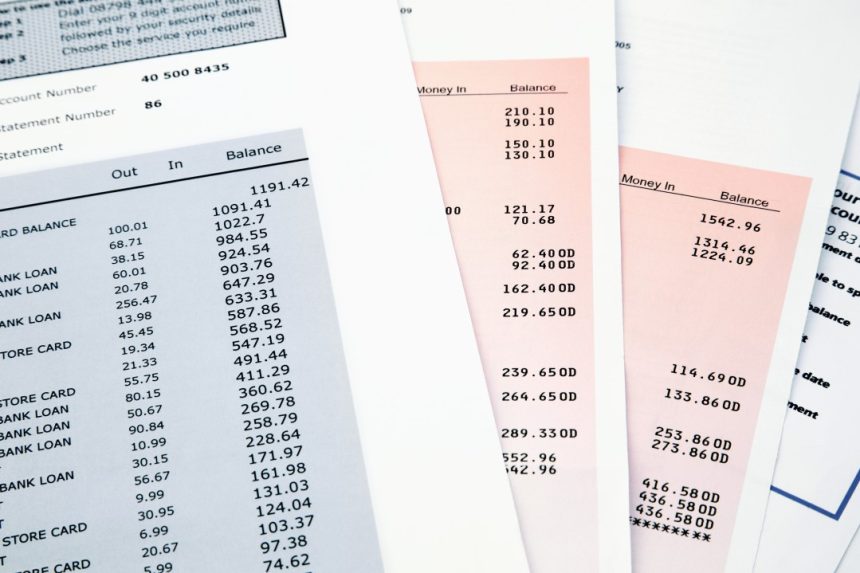
A Bank Statement Home Loan is a type of Non-Qualified Mortgage, commonly referred to as a Non-QM loan. It allows qualified borrowers to document income through bank deposits rather than relying primarily on tax returns.
Depending on the program, lenders may review 12 or 24 months of personal or business bank statements. They analyze deposits to estimate consistent income available for mortgage payments.
Lenders still assess your ability to repay by considering credit, debts, assets, down payment, reserves, property, and income stability. The key difference is the use of documentation that aligns with how independent professionals earn income.
Rather than focusing solely on post-deduction income, lenders examine the actual cash flow in your business or personal accounts.
Why Traditional Mortgage Underwriting Can Be Difficult for the Self-Employed
Traditional mortgage underwriting was largely built around predictable employment. A W-2 employee typically receives regular paychecks and can document income using pay stubs, W-2 forms, and employment verification.
Self-employed income is often complex. You may own a business, work on commission, receive payments from multiple sources, or experience fluctuating monthly earnings. Your business may also pay expenses before you draw personal income.
When lenders use tax returns, they start with taxable income and apply specific calculations. Legitimate write-offs can reduce qualifying income, even if your actual cash flow is strong.
This disconnect can be frustrating. Your income is not too low, but it is measured in a way that does not reflect your business operations. Bank statement financing helps bridge this gap.
Who Can Benefit From a Bank Statement Mortgage?
Bank Statement Home Loans can serve a wide range of self-employed borrowers.
- Freelancers and Creatives: Graphic designers, writers, photographers, consultants, and other solo practitioners often have irregular income from multiple clients. A 24-month history of bank statements provides lenders with a clear view of your earning capacity.
- Independent Contractors and Gig Workers: Contractors in fields such as tech, construction, logistics, or healthcare may have high income but lack traditional documentation. Bank statement loans are well-suited for these situations.
- Commission-Based Sales Professionals: If much of your income is from commissions rather than salary, tax returns may understate your earnings. Bank statements provide lenders with a more accurate picture of your cash flow.
- Small Business Owners: Entrepreneurs who take distributions, pay themselves through their business, or reinvest in their companies may show modest taxable income. Bank statement loans enable lenders to assess actual revenue beyond accounting strategies.
This program is not limited to a single profession. It is intended for borrowers with real, documentable income that is structured differently from traditional W-2 employment.
Personal vs Business Bank Statements
A lender may use personal or business bank statements, or a combination of both, depending on the program and how you receive income.
Personal bank statements are suitable when business earnings are regularly transferred to your personal account. Lenders review qualifying deposits and exclude transfers, loans, refunds, or other non-income funds.
Business bank statements are used when most revenue stays in a business account. Lenders must account for business operating costs, so gross deposits are not treated as personal income since some funds cover expenses.
Lenders may apply a standard expense factor or review an expense analysis from a qualified professional, depending on program guidelines. The remaining amount estimates your qualifying income.
Benefits of a Bank Statement Home Loan
The primary benefit is access to alternative income documentation. For self-employed borrowers denied by conventional lenders, bank statement loans provide new opportunities, which is especially valuable in competitive markets where delays can mean missing out on properties.
These loans also offer flexibility. Many programs allow higher loan amounts, support non-traditional property types, and can be used for primary residences, second homes, or investment properties. Some lenders offer competitive rates for well-qualified borrowers with strong credit and reserves.
Another advantage is recognition of multiple income sources. If you work with several clients or receive payments through various channels, lenders can review your deposit history instead of relying on a single employer.
There is also an emotional benefit. Self-employed borrowers often feel they must justify their income. Bank statement programs recognize that independent income can be stable and reliable, even if it does not arrive on a fixed schedule.
Drawbacks of Bank Statement Loans
The flexibility of a Bank Statement Home Loan comes with certain trade-offs.
Interest rates on non-QM loans are typically higher than those for conventional or FHA loans. The rate depends on your credit score, loan-to-value ratio, and lender risk tolerance. Many borrowers refinance into a conventional loan after establishing two years of strong tax returns, using a bank-statement loan as a temporary solution.
Down payment requirements are also higher. Most programs require at least 10% down, with many lenders preferring 20% or more for larger loans. Lenders also look for sufficient reserves to cover several months of mortgage payments beyond the transaction.
Qualifying income calculations may differ from expectations. When using business bank statements, lenders often apply an expense factor, usually 50% to 75% of deposits, to account for operating costs. As a result, gross deposits and qualifying income can vary significantly. Understanding this calculation before applying is important, and a knowledgeable loan officer can assist you.
Bank Statement Loan vs. a Traditional Mortgage
A traditional mortgage may offer better terms if you qualify using tax returns and standard documentation. It is generally best to consider this option before exploring alternatives.
A Bank Statement Home Loan is valuable when conventional methods do not reflect your true financial capacity. While you may pay a higher rate or a larger down payment, this program can provide access to financing that is unavailable through traditional underwriting.
Your decision should consider more than just approval. Compare interest rates, monthly payments, cash required at closing, reserve requirements, and long-term costs.
In some cases, using a bank statement loan now and refinancing later as your finances or available programs improve is the best approach. In other situations, the loan may serve as a suitable long-term solution.
A Mortgage Designed Around How You Do Business
Freelancers and business owners earn income in diverse ways. Some have steady contracts, while others work on commission, complete large projects, or experience seasonal fluctuations. This variety does not diminish the legitimacy of their income.
A Bank Statement Home Loan enables qualified self-employed borrowers to demonstrate financial strength through income deposits. It serves freelancers, contractors, salespeople, entrepreneurs, and business owners whose tax returns do not reflect their full financial picture.
The program still requires thorough underwriting, strong documentation, and a realistic budget. When traditional financing focuses too narrowly on taxable income, bank statements can provide a more accurate representation.
You built your income differently; your mortgage application may need a different approach as well.