

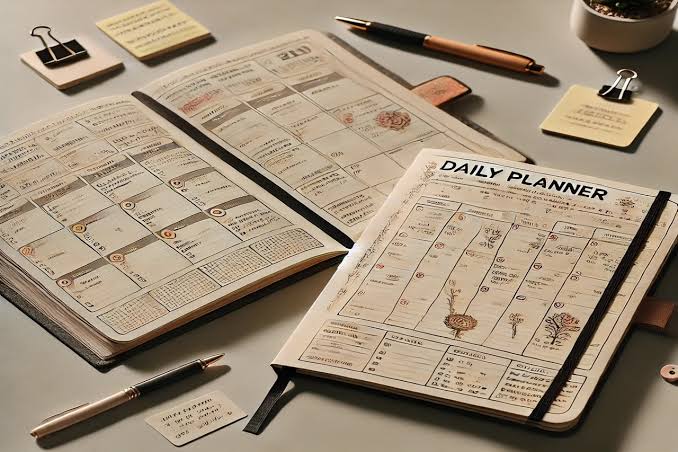
Time blocking is deceptively simple. Instead of keeping a list of things to do, you assign each one a place on the calendar, and the calendar becomes the plan. People who stick with it usually describe the same benefit: the day stops being a negotiation with yourself about what to do next. What time blocking does not do is guarantee that you show up to each block with the alertness to use it. A perfectly planned 9 a.m. deep-work slot after five hours of sleep is still a bad hour.
That is where the second half of this article comes in. Productivity aids, from a cup of coffee to a prescription eugeroic like modafinil, act on energy and attention rather than planning. Combined thoughtfully with time blocking, they turn a schedule into a schedule you can actually execute. Combined carelessly, they either wreck your sleep or lull you into thinking a pill can substitute for a plan. This is a practical guide to fitting the two together.
What Time Blocking Solves and What It Leaves Open
The strength of time blocking is that it forces three decisions in advance: what matters, how long it should take, and when it happens. Making those decisions once in the morning, or the evening before, spares you from remaking them fifty times during the day. It also exposes overcommitment immediately, because a day that needs fourteen hours of blocks is visibly impossible in a way a list never is.
Its weakness is that it assumes a fixed supply of attention across the day. Blocks are drawn as equal rectangles, but the person filling them is not equally capable at 9 a.m., 2 p.m., and 6 p.m. Time blocking handles the “what” and “when.” Productivity aids handle the “can I actually focus right now,” and the combined system works best when each is doing its own job.
Map Your Energy Before You Map Your Day
Before any substance enters the picture, the first productivity aid is knowing your own alertness curve. Most people, given a consistent wake time, follow a recognizable pattern:
- A sharp rise in alertness over the first one to three hours after waking.
- A sustained peak through the late morning.
- A dip in the early afternoon, typically 1 to 3 p.m., partly circadian and partly post-meal.
- A secondary rise in the late afternoon.
- A steady decline through the evening as sleep pressure builds.
Track your own for a week. Rate your focus on a one-to-five scale at the top of each hour. The result is a template for where each type of block belongs:
- Deep work blocks (writing, analysis, design, coding) go in the morning peak.
- Administrative blocks (email, invoices, scheduling) go in the afternoon dip.
- Collaborative blocks (meetings, reviews) go in the late-afternoon rise.
- Shallow wind-down (planning tomorrow, light reading) closes the day.
Once your blocks are matched to your natural curve, the amount of pharmacological support you need drops noticeably. Many people find that scheduling alone fixes the problem they thought needed a focus enhancer.
Layering Pharmacological Aids Onto the Blocks
With the schedule aligned, the next step is deciding whether and where a substance helps. Think of it as a set of layers, each with a specific role and a specific timing rule.
Caffeine: The Peak Extender
Caffeine blocks adenosine receptors, delaying the sleepiness signal. Around 100 to 200 mg, taken 30 to 45 minutes before a deep-work block, sharpens vigilance for three to five hours. Two timing principles matter for time blockers:
- Do not take it immediately on waking. Cortisol is already high; wait 60 to 90 minutes, which conveniently aligns with the start of most morning deep-work blocks.
- Stop by early afternoon. A dose at 3 p.m. still has a quarter of its effect at 9 p.m.
Pairing caffeine with L-theanine at roughly 200 mg theanine to 100 mg caffeine smooths the effect, which is useful if your deep-work block involves careful, non-frantic thinking.
Eugeroics: The Full-Day Foundation
Modafinil is a prescription wakefulness-promoting agent approved in the United States for narcolepsy, sleep apnea with residual sleepiness, and shift work disorder. Its mechanism is different from caffeine: it inhibits the dopamine transporter, producing a gradual and sustained rise in dopamine signaling with downstream activation of the orexin and histamine systems that hold the brain in a stable waking state. A standard 100 to 200 mg dose in the morning lasts most of the day, with a half-life around 12 to 15 hours. Armodafinil, the R-enantiomer, at 150 to 250 mg, runs slightly longer at around 15 hours. Adrafinil, an older prodrug converted by the liver into modafinil, is slower, requires larger doses, raises liver-enzyme concerns with chronic use, and was discontinued by its manufacturer.
For a time blocker, the relevance is duration. Where caffeine extends one block, a eugeroic supports the whole schedule. Research suggests its benefits are largest in sleep-deprived people and modest in the well-rested, and it has low abuse potential compared with amphetamines while remaining a Schedule IV controlled substance. Its role in a combined system is narrow: for people with a medical indication, it makes the entire day’s blocks executable. For healthy people with normal sleep, the gain is small and the cost, in sleep disruption if timed wrong, is real.
Supplements: The Background Layer
Daily creatine has reasonable evidence for protecting cognition during sleep restriction and needs weeks to take effect, so it is not tied to any block. Rhodiola has modest support for fatigue under stress. These are quiet background aids, not block-specific tools.
A Sample Combined Day
Here is how the layers look on a calendar for someone with a conventional daytime schedule and a 7 a.m. wake time. The eugeroic row applies only to someone with a prescription; omit it otherwise.
| Time | Block | Aid | Note |
|---|---|---|---|
| 7:00 | Wake, outdoor light 15 min | Light only | Anchors the clock; no caffeine yet |
| 7:30 | Breakfast, plan review | Modafinil if prescribed | Early dose protects tonight’s sleep |
| 8:30 | Deep work 1 | Caffeine 100 mg + theanine | 30 min before block start |
| 10:30 | Short break, walk | None | Movement resets attention |
| 10:45 | Deep work 2 | None | Riding the morning peak |
| 12:30 | Lunch, walk | None | Protein-forward to soften the dip |
| 13:30 | Admin block | None, or light caffeine | Last caffeine of the day |
| 15:00 | Meetings and reviews | None | Late-afternoon rise handles it |
| 17:00 | Plan tomorrow | None | Ten minutes, blocks drawn |
| 20:00 | Wind-down | Dim lights, warm screens | Counteracts residual stimulant |
| 23:00 | Sleep | Seven to eight hours protected |
The pattern is that every aid front-loads. Nothing with a half-life is taken after early afternoon, and the evening is dedicated to undoing whatever alertness debt the day created.
Common Failure Modes in the Combined System
Using aids to rescue a badly placed block. If deep work is scheduled for 4 p.m. and it keeps failing, the answer is to move the block, not to add a stimulant at 3:30. The whole point of the combined system is that scheduling does the heavy lifting.
Letting the eugeroic expand the schedule. People with a prescription sometimes notice they can fit more blocks into a day and then do so, week after week. Modafinil reduces the feeling of sleep pressure; it does not repay sleep debt. A schedule that only works with pharmacology is a warning, not an achievement.
Filling breaks with screens. Breaks between blocks are supposed to let attention recover. Scrolling is not rest; it is a different kind of demand. A walk, a window, or simply staring at nothing works better than any nootropic.
Skipping the evening planning block. The ten minutes spent drawing tomorrow’s blocks is the highest-return slot on the calendar. Skip it and the next morning starts with the exact decision fatigue time blocking exists to prevent.
Weekend drift. Sleeping in on Saturday and Sunday shifts the body clock, and Monday’s morning peak arrives late. A consistent wake time is a productivity aid in its own right, and it costs nothing.
Adjusting for Non-Standard Schedules
Shift workers and people in distant time zones can use the same system with the clock rotated. The principles hold: anchor with light at the start of the “day,” place deep blocks in the first half, front-load any pharmacological aid, and darken the environment before the sleep period. This is also the situation where a eugeroic has its clearest medical justification, since shift work disorder is one of modafinil’s approved uses. Timing a dose at the start of a night shift rather than partway through it is the difference between a productive night and a lost following day.
Modafinil is a prescription medication and rules for obtaining it vary between countries; discuss it with a doctor before considering it, particularly if you take hormonal contraceptives or have cardiovascular or psychiatric history. No cognitive enhancer substitutes for sleep, and a well-rested time blocker with coffee usually outperforms a sleep-deprived one on anything stronger.
Frequently Asked Questions
How long should a deep-work block be if I am using caffeine? Ninety minutes is a reasonable ceiling regardless of what you have taken. Attention degrades past that even with stimulant support, and a ten-minute break between blocks pays for itself.
Should I take caffeine before every block or just the first? Just the first one or two. Repeated dosing through the day builds tolerance quickly and erodes sleep. Let the later blocks run on scheduling and momentum.
If I am prescribed modafinil, do I still need caffeine? Often not. Many people find the combination adds headache and anxiety without adding focus. If you keep caffeine, keep it small and early.
What if my energy curve is flat and I have no obvious peak? That usually points to irregular sleep or insufficient morning light. Fix the wake time and get outside for two weeks before concluding you have no peak; most people discover one.
Can time blocking work without any aids at all? Yes, and for many people it should. Aids are optional layers. Scheduling aligned to your natural curve is the base, and it is where most of the benefit lives.
Final Thoughts
Time blocking and productivity aids solve different problems, which is exactly why they combine so well. Blocking decides what happens when and matches demanding work to the hours you are naturally sharpest. Aids, whether caffeine timed to a deep-work block or a prescribed eugeroic supporting an entire shift, supply the attention needed to use those hours fully. The rule that keeps the system honest is front-loading: nothing with a half-life after early afternoon, and an evening designed to protect the sleep that tomorrow’s blocks depend on. Get the schedule right first, add the smallest effective layer of support, and let the calendar rather than the coffee cup carry the load.
For more topic guides and related resources, visit Modavance.