

Cotton remains the most widely used natural fibre in apparel and home textiles, yet the category covers far more than a single material. The way a Cotton Fabric is grown, ginned, spun, woven, and finished produces sharply different results, from coarse upland weaves used in workwear to fine long-staple constructions used in premium shirting. Understanding these distinctions matters for sourcing decisions and product positioning alike. The list below moves from conventional bulk varieties through certified and specialty categories, ending with regional cottons that combine craft continuity with low input cultivation.
What Are the Main Types of Cotton Fabric in 2026?
The cotton fabric landscape spans conventional, certified, recycled, and heritage categories. The ten types below cover what brands and wholesale buyers encounter, from commodity grade material to specialty cottons with narrow regional origins. Each sits at a different point on the price, certification, and traceability spectrum.
- Conventional Upland cotton accounts for the largest share of global production and most commodity grade fabric.
- Pima cotton offers longer staple length and a softer hand, grown primarily in the United States and Peru.
- Egyptian cotton from the Giza varieties is prized for fine yarn count and high tensile strength.
- Supima is a trademarked American Pima with verified origin and a licensed manufacturing chain.
- Sea Island cotton, grown in small volumes across the Caribbean, produces the finest commercial yarn count available.
- Better Cotton Initiative cotton is conventional cotton grown to improved environmental and labour standards.
- Organic cotton is cultivated without synthetic pesticides and certified under GOTS at the processing stage.
- Recycled cotton is produced from pre-consumer and post-consumer textile waste, often blended with virgin fibre.
- Handloom and Khadi cotton is woven on non-powered looms and carries authenticity marks in India.
- Kala cotton is an indigenous rainfed variety from Kachchh in Gujarat, traditionally grown without irrigation.
How Cotton Fabric Is Classified in the Industry
Cotton fabric classification draws on several overlapping axes, and a single piece of cloth carries identifiers from each. Fibre origin separates conventional, certified organic, BCI, and recycled categories. Construction divides woven from knitted fabric, with weaving interlacing warp and weft yarns and knitting looping a single yarn into interlocked stitches that produce stretch.
Staple length is the second axis, and it strongly influences both price and performance. Short-staple cottons under twenty-five millimetres produce coarser yarn suited to bulk applications. Long-staple cottons above thirty-two millimetres allow finer yarn count, with extra-long staple varieties such as Pima and Sea Island sitting at the top of this range and commanding a corresponding premium.
The third axis is finishing, which often accounts for more of the final cost than buyers expect. Greige fabric is the unfinished cloth as it leaves the loom or knitting machine. Pre-treatment, dyeing, and finishing then determine the final character, with each step adding cost, lead time, and environmental footprint to the quoted rate.
Conventional and Improved Cotton Fabric Categories
Most cotton fabric sold globally still falls into the conventional Upland category, grown in volume across India, the United States, China, Brazil, and West Africa. Within this group, three improved varieties deserve attention from buyers building a sourcing strategy. Each occupies a distinct position in the price and certification landscape.
Pima, Supima, and Egyptian Cotton
Pima cotton is grown primarily in the southwestern United States and parts of Peru, with longer staple fibres producing a softer fabric. Supima is the licensed trademark for American Pima, with verified origin and chain-of-custody documentation through the Supima Association. Egyptian cotton from the Giza varieties carries similar long staple credentials, though the term is loosely applied in retail and warrants supplier verification.
BCI Cotton
Better Cotton Initiative cotton is conventional cotton grown under farmer training programmes that reduce pesticide use, improve water management, and address labour conditions. It is not organic, and the standard does not eliminate synthetic inputs entirely. For brands transitioning from fully conventional supply chains, BCI offers a credible interim step with broad commercial availability.
Recycled Cotton
Recycled cotton is mechanically shredded from textile waste and respun into new yarn, usually blended with virgin fibre to maintain tensile strength. The principal trade-off is shorter resulting staple length and slightly lower durability, which influences end-use suitability. The environmental benefit comes from diverting textile waste from landfill and reducing demand on cultivated fibre.
Heritage and Specialty Cotton Fabrics from India
India produces several cotton fabric categories that combine traditional craft methods with low input cultivation, and these have moved from niche to commercially viable as conscious sourcing has matured. Two deserve closer attention because each represents a distinct strand of textile heritage with documented livelihood links. Buyers should expect smaller batch sizes and visible weave variation as part of the material identity.
Handloom and Khadi Cotton
Handloom cotton is woven on non-powered looms by trained artisans, while Khadi specifically refers to hand-spun yarn that is then woven by hand. Both categories carry authenticity marks issued by the Khadi and Village Industries Commission and the Handloom Mark scheme, allowing brands to substantiate provenance claims. The distinction matters because the two terms are often used loosely in retail, even though Khadi imposes the stricter origin and production conditions.
- Slight irregularities in weave that signal handcraft rather than machine production output.
- Lower energy footprint at the weaving stage because no powered looms are used in production.
- Direct livelihood support for weaving clusters across regions such as West Bengal, Telangana, and Rajasthan.
Kala Cotton
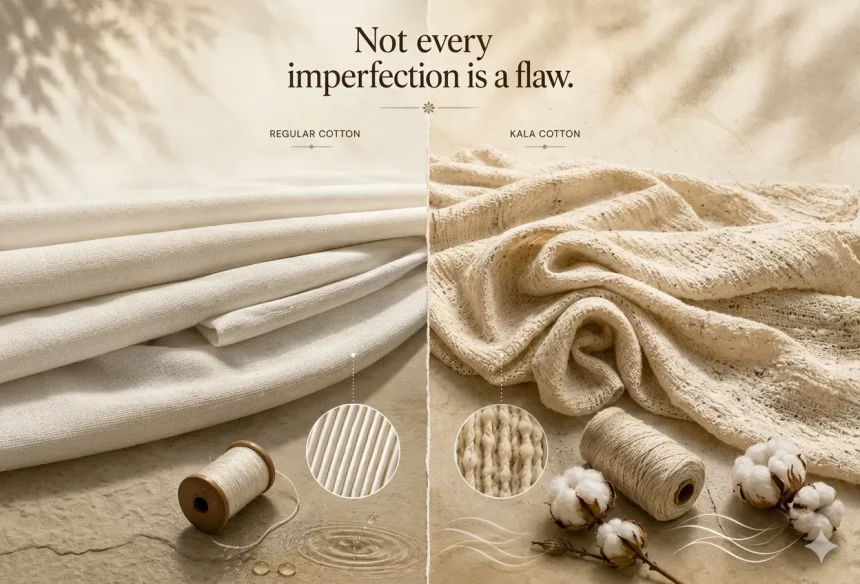
Kala Cotton Fabric is woven from an indigenous old-world cotton species native to the Kachchh region of Gujarat, traditionally grown without irrigation, synthetic fertilisers, or pesticides because the variety is naturally resilient to arid conditions. The fibre has been revived through artisan cooperative work over the past two decades, moving from near extinction back into commercial weaving. Documentation of the variety’s supply chain comes primarily from the Khamir crafts resource centre in Kachchh.
- Rainfed cultivation that requires no irrigation infrastructure, unlike most commercial cotton.
- Short staple length that gives the woven cloth a distinctive coarse texture and visible character.
- Revival through artisan cooperatives that links the material directly to documented livelihood outcomes.
Choosing the Right Cotton Fabric for Your Project
Selecting the appropriate cotton fabric depends on the end use, the brand’s certification position, the order volume, and tolerance for material variation. A premium shirting brand will likely prioritise long-staple Pima, Supima, or Egyptian cotton for hand and durability, while a conscious basics brand may favour GOTS certified organic cotton in jersey or voile constructions. Workwear and uniform programmes often combine BCI or recycled cotton with synthetics for a cost and performance balance.
For brands building around craft and material storytelling, handloom, Khadi, and Kala Cotton Fabric provide differentiation that mass produced fabric cannot match, with the trade-off being smaller batches, longer lead times, and visible weave variation. Each category rewards buyers who can communicate the production context to their own customers rather than treating the fabric as a commodity input. The same buyer profile usually values transparent supplier reporting and accepts longer sampling cycles to secure the material identity.
The most useful step before committing to any cotton fabric is to request swatches, transaction certificates where applicable, and a clear statement of finishing processes included in the price. Suvetah documents its own cotton fabric range, including Kala cotton sourced from Kachchh cooperatives, against the same checks. A disciplined sourcing process is what protects both the brand’s claims and its margins over the lifetime of the collection.