

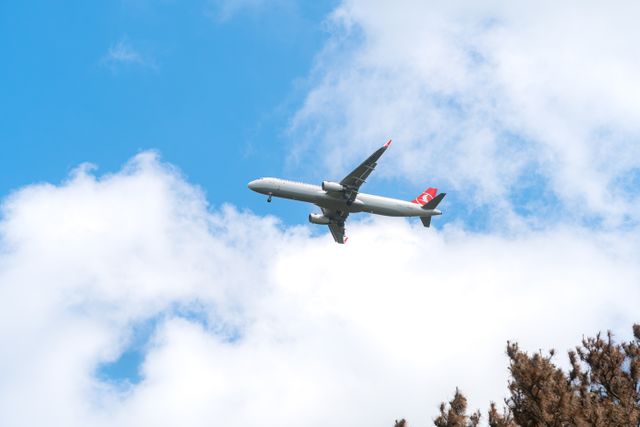
Cockpits today look nothing like they did forty years ago. Commercial and military aircraft now carry technological systems that reshape how pilots read situations, weigh risks, and act under pressure. That’s not about comfort upgrades. It’s not about fuel economy, either. These tools cut straight to the core of pilot judgment during routine flights, challenging weather conditions, and genuine emergencies alike. When you examine what these systems actually do, aviation’s remarkable safety record becomes much easier to understand.
1. Glass Cockpit Displays and Real-Time Data Integration
Rows of mechanical gauges once forced pilots to constantly move their eyes from instrument to instrument. They had to scan left, right, and down, piecing together information from multiple separate sources. Glass cockpits transformed that process. Digital displays now combine altitude, airspeed, heading, navigation information, and engine performance data into a single integrated view.
The greatest advantage comes from real-time data integration. Information updates continuously, providing pilots with an accurate picture of the aircraft’s status at all times. Consider an approach into an airport where visibility is rapidly deteriorating. Wind speed, barometric pressure, runway information, and visibility data can all be displayed simultaneously on a high-resolution screen.
This significantly reduces cognitive workload. Instead of spending mental energy gathering information, pilots can focus on evaluating options and making sound decisions. Modern display systems are also highly customizable, allowing pilots to prioritize information based on the phase of flight and operational requirements.
2. Weather Radar and Advanced Meteorological Tools
Weather remains one of aviation’s greatest challenges, but modern technology has dramatically improved a pilot’s ability to understand and avoid hazardous conditions.
Today’s weather radar systems do far more than detect precipitation. They identify storm intensity, track movement, highlight turbulence, and warn of potentially dangerous wind shear conditions. This information allows flight crews to make proactive decisions rather than reactive ones.
When thunderstorms develop along a route, pilots can evaluate alternate paths well before reaching the affected area. They can request altitude changes, adjust fuel planning, or revise approach strategies based on current conditions rather than waiting until hazards are directly ahead.
Ground-based weather networks and satellite data further enhance situational awareness. Pilots flying across long distances can monitor weather developments throughout the journey and make informed adjustments as conditions evolve. This level of forecasting and visibility helps reduce risk while improving operational efficiency.
3. Enhanced Vision Systems and Terrain Awareness Technology
Poor visibility has historically been one of the most difficult challenges pilots face. Fog, heavy rain, smoke, and darkness can significantly reduce visual references during critical phases of flight.
Enhanced vision systems address this challenge through the use of infrared cameras and advanced image-processing technologies. These systems can display terrain features, runway environments, and obstacles that may not be visible through the windshield. In many situations, pilots gain a clearer understanding of their surroundings than they could achieve through visual observation alone.
Terrain awareness and warning systems provide another critical layer of protection. These systems continuously compare aircraft position and altitude data with detailed terrain databases. If the aircraft’s projected flight path creates a potential conflict with terrain, the system generates immediate warnings and guidance.
This capability is particularly valuable during instrument approaches and operations near mountainous terrain. Early alerts provide pilots with additional time to correct the situation before it becomes dangerous, helping prevent controlled flight into terrain accidents.
4. Automated Flight Management Systems and Decision Support
Flight management systems have become powerful tools for improving operational decision-making. These systems process information related to aircraft performance, fuel consumption, wind conditions, navigation requirements, and traffic flow.
When flight plans change due to weather or air traffic restrictions, the system can rapidly calculate updated routing information and efficiency recommendations. Pilots receive valuable insights that would be difficult to generate manually while simultaneously managing other flight responsibilities.
Decision-support functions add even greater value. If fuel consumption begins exceeding projected levels, the system can evaluate available options and determine whether continuing to the destination remains practical. If an engine or aircraft system shows unusual performance trends, alerts and recommended procedures can be presented quickly.
Think of it as a sophisticated analytical assistant that continuously evaluates information and provides guidance without replacing pilot authority or judgment.
The hydraulic systems supporting many flight-critical functions also require dependable hardware. During maintenance procedures, technicians often utilize Parker Stratoflex fittings to help maintain secure hydraulic connections capable of performing reliably under demanding aviation conditions.
5. Traffic Collision Avoidance Systems and Airspace Awareness
Air traffic controllers play a critical role in maintaining safe aircraft separation, but modern aviation adds an extra layer of protection through Traffic Collision Avoidance Systems (TCAS).
These onboard systems continuously monitor nearby aircraft and evaluate their projected flight paths. If another aircraft begins approaching a potentially unsafe position, the system generates alerts for the flight crew. When necessary, it can issue specific resolution advisories directing pilots to climb or descend to maintain safe separation.
The value of these systems is significant. Pilots gain an independent source of traffic awareness that operates regardless of weather conditions or radio communication quality. Modern aircraft can also exchange position and altitude information with one another, creating a more complete picture of local air traffic.
This layered approach greatly reduces the risk of midair collisions and provides pilots with additional confidence when operating in congested airspace.
Conclusion
Glass cockpit displays, advanced weather radar, enhanced vision systems, flight management computers, and collision avoidance technology have fundamentally changed how pilots make decisions. Each system addresses a specific challenge by reducing uncertainty, improving situational awareness, and providing timely information when it matters most.
The true benefit comes from how these technologies work together. Pilots no longer rely solely on fragmented information or manual calculations. Instead, they operate within an environment where critical data is continuously monitored, analyzed, and presented in a clear and actionable format.
Aviation’s outstanding safety record is not the result of a single breakthrough. It is the product of decades of innovation focused on helping pilots make better decisions. As technology continues to advance, these tools will likely become even more capable, providing flight crews with greater awareness, stronger support, and an even higher margin of safety for every flight.