


India’s business ecosystem has evolved dramatically over the past decade. Today, entrepreneurship isn’t just about launching an idea—it’s about navigating regulatory frameworks, sustaining compliance, and building trust in a marketplace that increasingly values credibility.
Among all compliance requirements, GST registration stands as one of the most defining markers of a business entering the formal economy. It enables companies—whether startups, freelancers, agencies, or SMEs—to operate transparently, bill professionally, and participate in B2B and government networks.
However, the journey toward GST compliance isn’t always simple. Many young businesses struggle with paperwork, verification, and documentation requirements, especially when they don’t yet occupy a physical office. This is where modern business tools, such as virtual office solutions, have stepped in to change the compliance landscape—making legality not only accessible but strategic.
Why GST Registration Matters Beyond Legal Obligation
While GST registration is mandatory once a business crosses the prescribed turnover limit, the benefits go far deeper than avoiding penalties.
A registered GST identity enables a business to:
- Issue formal GST invoices
- Claim input tax credit
- Sell across states without barriers
- Apply for tenders or corporate contracts
- Onboard onto marketplaces, payment gateways & SaaS platforms
More importantly, registration signals professional intent.
A GST-registered business tells clients:
“We’re accountable, structured, and here to operate at scale.”
For many founders, this becomes a psychological shift—moving from “running a hustle” to “building a company.”
The Compliance Reality: Where Most Businesses Get Stuck
Even though registration is digital, documentation isn’t always straightforward. Businesses must provide:
- A valid commercial address
- Proof of ownership or lease agreement
- A utility bill associated with the business location
- A No Objection Certificate from the property owner
For new businesses operating remotely or from home, this becomes a bottleneck. Residential addresses often fail verification, and renting traditional office space just for compliance documentation doesn’t make financial sense.
This gap is exactly what modern compliance infrastructure is solving.
How Virtual Offices Transform the GST Registration Journey
One of the most effective enablers of smooth GST registration today is the virtual office model. Instead of renting or leasing physical premises, businesses can use a legally verified commercial address for documentation, registration, and correspondence.
With a virtual setup, companies receive:
- Address proof accepted by GST authorities
- NOC and Rent Agreement
- A current utility bill aligned with the address
This eliminates the most common point of failure in registration—the address mismatch.
For instance, many startups initiate compliance faster using a virtual office in Hyderabad because it allows them to file for GST, receive notices, and maintain official documentation without securing physical workspaces during early business stages.
This shift removes months of uncertainty, replacing it with compliance clarity.
Compliance Is Not Just a Requirement—It’s a Strategy
A business registered under GST becomes part of the formal economy. The ripple effects of that shift are long-term:
| Growth Factor | Without GST Registration | With GST Compliance |
| Client Trust | Limited | High |
| National Expansion | Restricted | Seamless |
| Access to Corporate Clients | Rare | Common |
| Credibility with Banks | Low | Strong |
| Compliance Score | Non-recognized | Legally Verified |
This compliance-to-growth pipeline is why many founders now treat GST registration as a strategic milestone, not just a rule to follow.
The Technology Shift: Automaxtion Meets Regulation
India’s digital governance framework is evolving, and GST systems have already adopted automation, e-filing, and online tracking.
Virtual compliance services work hand-in-hand with this ecosystem. Together they offer:
- Digital documentation handovers
- Real-time notice forwarding
- Portal assistance
- Faster turnaround for filings and updates
The result?
Businesses spend less time navigating confusing government pages and more time building revenue.
Compliance for Scaling: Multi-State GST Strategy
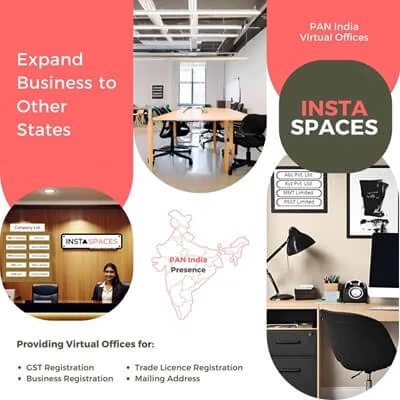
Businesses operating across multiple states must register separately under GST for each region. Traditionally, this meant physically renting multiple offices—not just costly, but operationally impractical.
With a virtual compliance infrastructure, a business can scale into multiple states while maintaining remote operations.
This is especially useful for:
- E-commerce sellers
- Agencies with national clients
- SaaS and IT service companies
- Consultants working statewide
Instead of acquiring infrastructure, founders acquire compliance presence.
A Real-World Shift: From Informal to Structured Growth
Take the example of an independent marketing consultant turning into an agency founder. Initially, invoices are casual, operations are flexible, and revenue is inconsistent.
Once GST registration is obtained:
- Retainer clients become possible
- Marketplace onboarding opens up
- Government and enterprise projects become reachable
- Accounting becomes clean and scalable
What began as an individual project evolves into a sustainable, structured company.
This transition is why compliance isn’t a barrier—it’s a ladder.
The New Normal: Virtual-First Compliance Models
As remote working, digital business, and multi-city operations become standard, compliance models must evolve. Businesses no longer require four walls to operate—but they still require a verified identity to legally exist.
Virtual offices provide the missing link between:
✔ flexible work models
✔ legal structure
✔ and marketplace credibility
By 2028, it’s expected that over 65% of Indian SMEs will operate hybrid or virtual-first business models, where compliance anchors the company—not real estate.
Conclusion
For India’s new-generation businesses, GST registration is more than a legal step — it’s an entry gate to opportunity, scale, and formal recognition.
And while the compliance landscape may appear complex, tools like virtual offices are making it accessible, affordable, and future-ready.
Ultimately, the businesses that embrace compliance early don’t just survive —
they scale faster, operate smarter, and compete stronger.