

Many traders enter the market with a strategy that someone else has told them is “the way to go”. They hop onto a popular trading plan, replicate techniques they see other people do online, or try to emulate their trading idols without pausing to assess whether that particular trading approach actually suits them.
To be honest, trading success isn’t just about being an expert at technical analysis or having a basic understanding of how the overall market works. It also comes down to picking a trading style that suits the personality, lifestyle, and comfort level tied to your risk profile.
Understand Your Risk Tolerance Before Choosing a Style
Every trading decision comes with its own degree of risk. But the way individuals respond to risk can vary a lot. Some traders thrive on frequent market fluctuations. Others like to keep things a lot more stable.
Before selecting a trading style, evaluate how much uncertainty you can handle. If a market glitch or temporary loss puts you into panic mode, then probably aggressive trading isn’t the best fit and may not be the suitable option in the long run.
Different Trading Styles Require Different Commitments
People often overlook one pivotal aspect of trading: how much time and energy you can realistically commit to it. The types of trading you choose will depend on how much time and effort you can put in, and that can vary to a much greater extent.
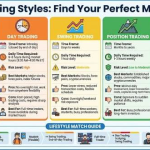
For instance, intraday traders spend a large portion of their day constantly reacting to market movements. Swing traders take a more laid-back approach as they hold their positions for a few days or weeks at most, and then there are position traders who think long-term and often hold onto a trade for a considerably longer time.
Of course, which approach is right for you will depend on your overall lifestyle and how much time you have to dedicate to trading.
For instance, if you are working full-time, then you probably don’t have the time or the temperament for an active trading schedule, so you might find yourself drawn to long-term or swing-based trading instead of trying to trade actively all the time.
Personality Often Determines Trading Success
Trading psychology is a major contributor to what separates the winners from the losers. If you can’t sit still, if you get restless waiting for that long-term position to yield returns, you might find long-term position trading a real challenge.
Conversely, if you are the type of person who loves to dig deep into the numbers of equity shares, making quick decisions during the day can be a real nightmare. So, it ultimately comes down to figuring out what comes naturally to you – what you are just good at doing, no matter what. From there, you can pick the trading style that plays to your strengths.
Match Your Market Exposure to Your Objectives
Trading styles should line up with what you are trying to achieve financially. Some traders focus on short-term gains, while others aim to capture long-term market growth.
Ultimately, it is your goals that should be guiding the decision, not just market emotions. Having a clear idea of what you want to get out of trading gives you a baseline for picking good trading strategies and managing expectations.
Final Thoughts
Figuring out the right kind of trading style for yourself is a personal decision that goes way beyond just crunching numbers on a chart. You gotta have a realistic understanding of what you can handle, time-wise and risk-wise, and what you are trying to get out of it.
When you have got a trading style that actually fits with who you are and what you are after, that is the one that is going to be easiest to stick with, and it is the one that is likely to keep you on track in the long run. At the end of the day, success in trading usually isn’t about finding something that sounds cool; it is about finding something that feels right for you.